If you’re treating Google AI Overviews, which evolved from the Search Generative Experience in this new Generative AI search landscape, like a new secret algorithm, you’re aiming at the wrong target.
These summaries are not a separate search engine, and they are particularly prominent for queries with informational intent. They sit on top of Google Search and pull from pages Google can retrieve, understand, trust, and cite. That is why a page in position 14 can show up, while a page in position 2 sometimes does not.
Key Takeaways
- Treat AI Overviews as part of Google Search: They rely on the same core signals like crawlability, relevance, page quality, and entity understanding, often citing pages beyond the top 10 that offer clean, self-contained answers.
- Build quotable pages first: Start with direct answers in 2-4 sentences, use clear H2s, short sections, original insights, freshness, and strong information architecture like FAQs and schema to make content easy for Google to extract and trust.
- Prioritize authority and entities: Demonstrate E-E-A-T through author bios, brand clarity, references, and entity corroboration to boost confidence in your source, especially for YMYL topics.
- Tailor tactics by business type and measure visibility: Customize content for publishers, local businesses, SaaS, or ecommerce, then track AI Overview citations, impressions, and CTR in Search Console rather than rank alone.
Google AI Overviews use the same core search signals
The clearest point to keep in mind is simple: AI Overviews are a citation layer inside Search. Google still relies on crawlability, indexing, relevance, search intent, page quality, and entity understanding. A useful retrieval context explanation puts it well, Google uses large language models like the Gemini model to perform multi-step reasoning on complex questions, expanding one query into related sub-questions and assembling support from multiple pages.
Treat AI Overviews as part of Google Search, not as a separate ranking system with separate rules.
There are three confidence levels worth separating. Confirmed guidance says AI Overviews are generated from Google’s search systems. A strong evidence-based pattern from 2025 and 2026 studies is that cited pages often sit outside the top 10, especially when they contain clean, self-contained answers. An informed hypothesis is that schema and mixed media help because they make pages easier to interpret, not because they unlock a special ranking switch.
AI Overviews also overlap with older search features. Featured snippets still matter because snippet-ready passages are often easy for Google to quote. Traditional rankings still matter because of rank overlap; strong pages get discovered and trusted more often. Knowledge panels help too, because Google works better when it knows who the author, brand, and topic entity are.
Create pages Google can quote with confidence
Most teams still write for the click, then hope Google can extract something useful. That order no longer works well.
Start each important page with a direct answer. Then expand with detail, proof, examples, and next-step context. A good AI Overview source usually has short sections, clear subheads, and passages that stand on their own without extra explanation.
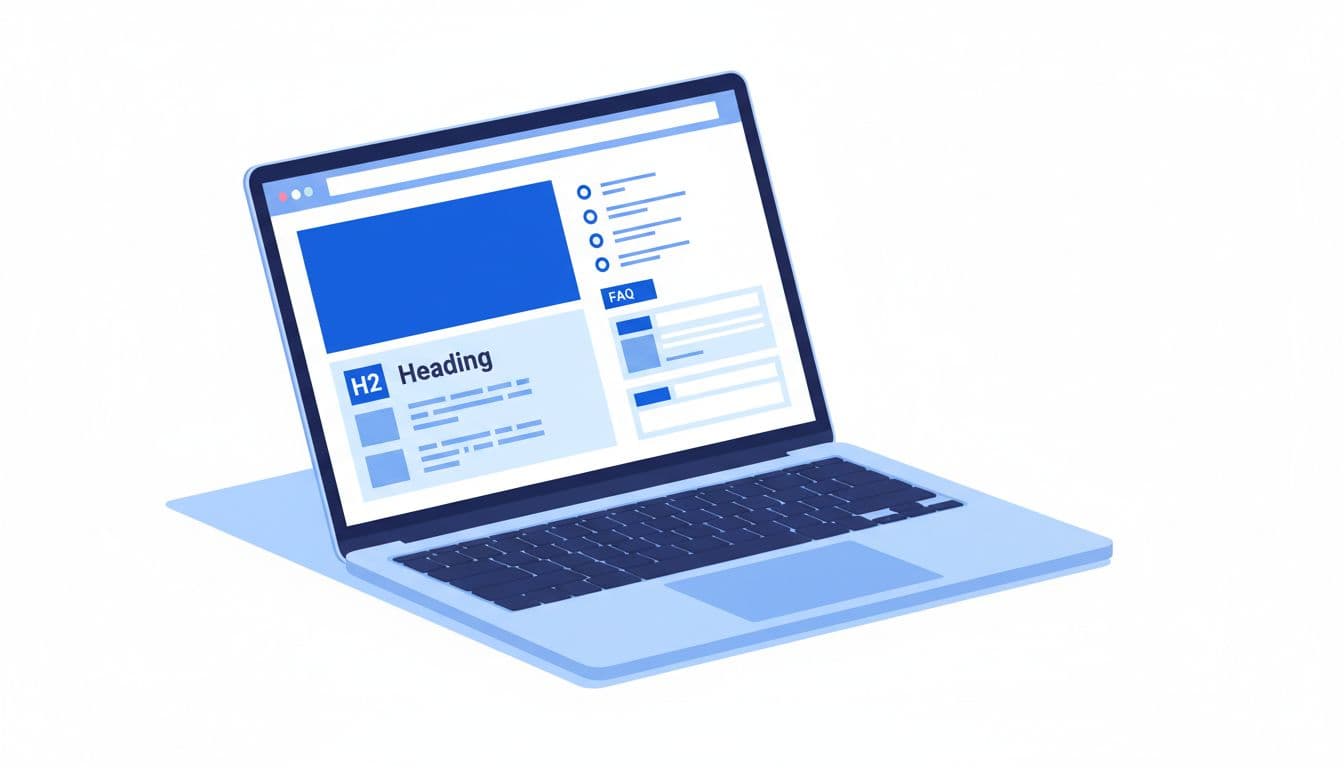
Several 2026 citation studies point in the same direction. Pages that win citations and reach Position zero tend to be semantically complete, easy to extract, and more useful than a generic summary page.
That means “source-worthy” Helpful content has a few traits and acts as a primary Linked sources candidate:
- It answers the main query in 2 to 4 sentences near the top.
- It breaks the topic into subquestions with clear headings.
- It adds something original, such as first-party data, a real example, or a sharper framework.
- It shows who wrote or reviewed the content, and why that person is credible.
- It refreshes stats, screenshots, and claims when the topic changes.
Freshness matters most when facts move fast. For AI Overviews, old advice with a new publish date is weak. New data, new examples, and clear revisions are much stronger.
This is also where information architecture pulls more weight than many teams expect. Use descriptive H2s, comparison tables, FAQ sections, concise definitions, and tight internal links. Google’s ability to quote a page depends on the permissions set in the Robots.txt file. Using Schema markup is an informed hypothesis for improving visibility. If a page feels easy to scan, it is often easier for Google to interpret as well.
Authority, entities, and brand clarity raise your odds
AI Overviews do not reward vague expertise. Google wants clear context around who is speaking, what they know, and why the page deserves trust. This ties directly to E-E-A-T principles as the driver for authority and trust (Google is particularly sensitive to these signals for YMYL topics).
That is why author pages, about pages, editorial policies, references, and consistent brand details matter. For businesses, local citations, case studies, reviews, and service-area clarity all help reinforce entity identity. For publishers, bylines and editorial review help. For SaaS brands, product pages should explain category, use case, buyer type, and integrations in plain language. For ecommerce, product pages need unique copy, specs, comparison content, strong review signals, and details that support product carousels where AI Overviews display specific items.

This quick comparison helps frame the relationship between search surfaces and query intent (informational versus commercial intent):
| Surface | What drives it most | Why it matters here |
|---|---|---|
| Traditional rankings | Relevance, quality, links, internal structure | Strong pages become likely citation candidates |
| Featured snippets | Tight question-answer formatting | Good proxy for extractable passages |
| AI Overviews | Search quality plus retrieval and citation patterns | Can cite multiple pages, not only top results |
| Knowledge panels | Entity clarity and corroboration | Helps Google trust the brand or expert |
A strong AI Overviews optimization guide makes a similar point: branded authority gives Google more confidence in the source, not just the sentence.
What to do by business type, and what to measure
The tactic should match the site model.
- Publishers should build original reporting, expert commentary, and topic hubs that answer sub-questions better than commodity content.
- Local and service businesses should focus on service pages, location context, expert bios, reviews, and proof-heavy FAQs.
- SaaS companies should publish comparison pages, implementation guides, pricing explainers, and use-case content with strong product context.
- Ecommerce brands should improve category guides, product comparisons, unique descriptions, and post-purchase content that answers real buyer questions.
Measurement also needs an update. Use Search Console to track queries that trigger AI Overviews, pages cited inside them, featured snippet ownership, branded search growth, and click-through rate changes on cited pages. Measure the impact on web traffic and CTR when your brand appears in an AI-generated snapshot. Features first appearing in Search Labs or AI Mode often set the stage for wider release, and user feedback continues to shape how these summaries are presented in organic search results. Rank alone is not enough, because visibility can rise even when blue-link position does not.
There is no guaranteed tactic here. Still, the winning pattern is clear. Google prefers pages it can understand fast, verify with confidence, and attribute to a credible source.
The pages most likely to earn visibility now are the ones that answer cleanly, add something new, and make the author and brand easy to trust. If you focus on those basics, you improve your odds in both classic search results and Google AI Overviews.
Frequently Asked Questions
Do Google AI Overviews have separate ranking rules?
No, AI Overviews use the same core Google Search signals like relevance, quality, and entity understanding. They act as a citation layer on top of search results, pulling from pages Google trusts and can easily interpret, often beyond the top 10.
How should I structure pages to appear in AI Overviews?
Lead with a direct 2-4 sentence answer to the main query, followed by subheadings, short paragraphs, original data or examples, and elements like FAQs or tables. Focus on scannability, freshness, and Robots.txt permissions to make extraction straightforward for Google’s models.
Why does authority matter more now?
AI Overviews demand clear who (author/brand), what (expertise), and why (trust signals) to cite with confidence, tying directly to E-E-A-T. Use bylines, editorial policies, case studies, and consistent entity details to reinforce credibility across search surfaces.
How do I measure success in AI Overviews?
Track AI Overview impressions, cited pages, featured snippet gains, branded searches, and CTR shifts in Search Console. Visibility can increase without blue-link rank changes, so monitor traffic impact from generative summaries and features in Search Labs.
What tactics work best by business type?
Publishers: original reporting and topic hubs. Local businesses: service pages with reviews and FAQs. SaaS: use-case guides and comparisons. Ecommerce: unique product details and buyer question answers. Always add primary value that generic pages lack.