If you want real control over AI crawlers access in 2026, start with robots.txt, the implementation of the Robots Exclusion Protocol. It is still the main file most major bots check for robots.txt ai crawlers, while llms.txt is newer and far less dependable as a control.
The hard part is not the syntax. It is deciding where openness helps your business, where it creates risk, and which bots deserve different treatment.
Key Takeaways
- Robots.txt remains the primary control for blocking AI crawlers like GPTBot, ClaudeBot, Google-Extended, and CCBot, while distinguishing training bots from search bots like Googlebot to avoid side effects on search indexing.
- Selective policies beat blanket rules: Block training data collection where reuse risks outweigh discovery benefits, allow search visibility, and use path-level rules to protect sensitive areas like /premium/ or /client-portal/.
- llms.txt is supplementary, not enforceable: Publish it for guidance on preferred sources, but rely on robots.txt, meta robots, X-Robots-Tag, and server controls for real access management.
- Review regularly: Monitor logs quarterly, as the 2026 AI user-agent landscape evolves, and avoid using robots.txt for noindex—pair it with page-level tags instead.
What these controls can, and can’t, do in 2026
For most sites, robots.txt is the first lever for managing access from AI crawlers, web crawlers, and search engine crawlers. These web crawlers and search engine crawlers have different behaviors; some act as scrapers gathering training data, while others support search features. Major providers and data collectors commonly look at it, including OpenAI’s GPTBot, Anthropic’s ClaudeBot, Amazonbot, PerplexityBot, and Common Crawl’s CCBot. Google also supports AI-related controls through robots.txt, but there is an important catch: Googlebot handles the primary search index, while Google-Extended is for AI purposes. As Parse explains in its Google-Extended guidance, blocking Google-Extended does not remove you from Google Search.
That distinction matters because AI traffic is no longer one thing. Some bots gather training data. Others support search, retrieval, or user-triggered visits. The AI user-agent landscape in 2026 is much more split than it was a year ago, so blanket rules often create side effects.
By contrast, llms.txt is still a soft signal. It can help you publish a clean map of important pages, docs, policies, or preferred sources as content signals for language models. That may help some tools understand your site better. Still, as of April 2026, major AI providers do not treat llms.txt as a reliable blocking mechanism. The State of llms.txt 2026 shows growing adoption, but adoption is not the same as enforcement.
Meta robots and X-Robots-Tag still have a place for governing crawling and indexing. Use them when you need page-level or file-level instructions, such as noindex, nosnippet, or rules on PDFs and feeds. However, they do not replace robots.txt. If a crawler never fetches a page because robots.txt blocks it, it cannot read the meta tag on that page.
Use robots.txt for crawl rules, meta robots or X-Robots-Tag for page and file handling, and login or server controls when access must stop.
Practical robots.txt rules for AI crawlers
A good robots.txt policy starts by separating training bots from search bots and user-driven retrieval based on their User Agent String. That lets you make business decisions instead of broad guesses.
Here is a simple reference point:
| Goal | Rule example | What it does |
|---|---|---|
| Block OpenAI training | User-agent: GPTBotDisallow: / | Stops GPTBot from crawling the site |
| Block Anthropic training | User-agent: ClaudeBotDisallow: / | Stops ClaudeBot training access |
| Opt out of Google AI training | User-agent: Google-ExtendedDisallow: / | Does not block Google Search indexing |
| Reduce reuse through open datasets | User-agent: CCBotDisallow: / | Blocks Common Crawl collection |
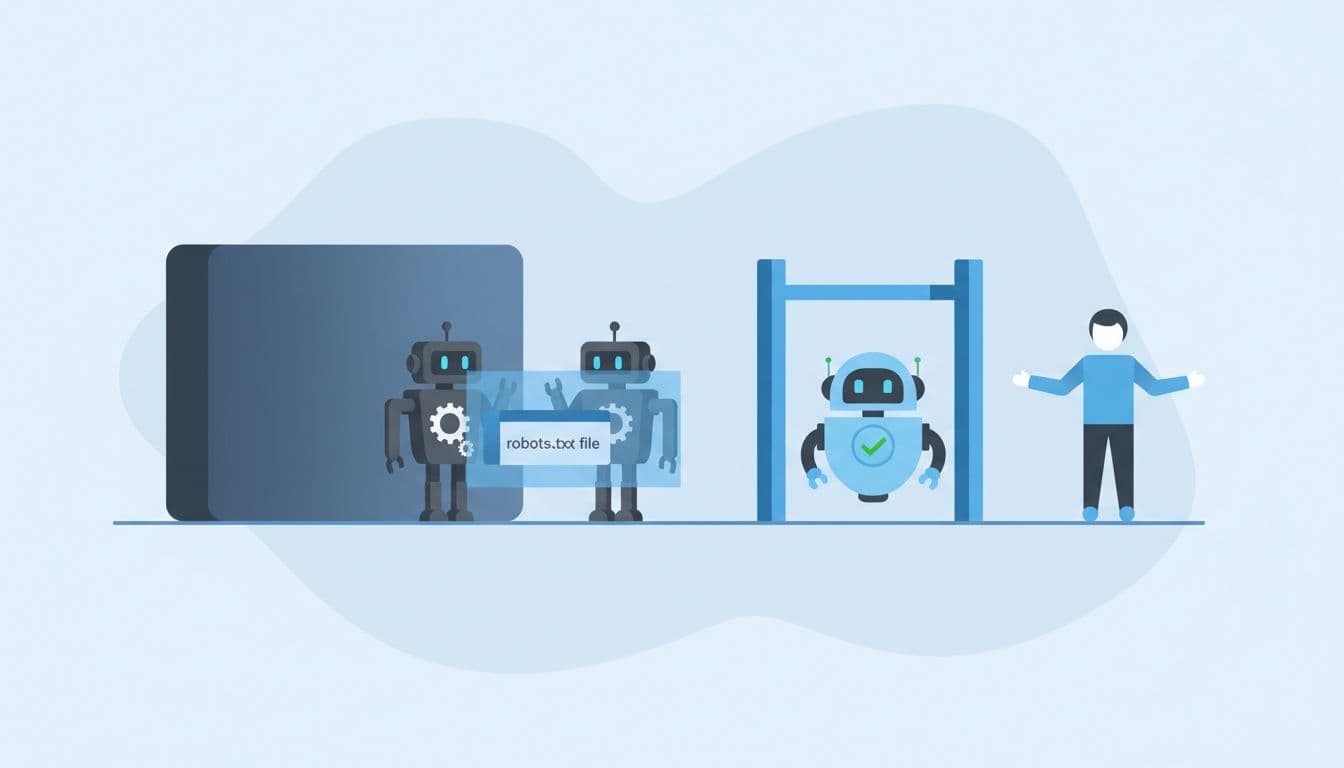
For many publishers, that first layer is enough. You can block training-oriented bots, keep Googlebot open for search, and still allow public content to rank in normal results.
Managed robots.txt files with path-level rules help when your site has mixed content and protect against server overload from aggressive scraping activities. You might allow /blog/ and /guides/, while using Disallow to block /premium/, /client-portal/, /research-notes/, or other high-value areas against scraping website content. That works well for law firms, SaaS companies, and publishers with a mix of public marketing pages and protected assets.
It also helps to keep a site-wide wildcard rule for sensitive folders. A standard User-agent: * with Disallow for private paths is still smart hygiene, no matter what you decide about AI bots.
One more gotcha: don’t use robots.txt when your real goal is de-indexing a page from search. In that case, use noindex where the crawler can still fetch the page, or use X-Robots-Tag on non-HTML files. Blocking crawl access too early can prevent the bot from seeing the directive you meant it to follow.
Should you block AI crawlers, allow them, or split the difference?
There is no universal answer here. The right policy depends on how your content makes money, how much of it is unique, and whether AI citations help or replace the visit.
### Blocking makes sense when your content has direct reuse risk
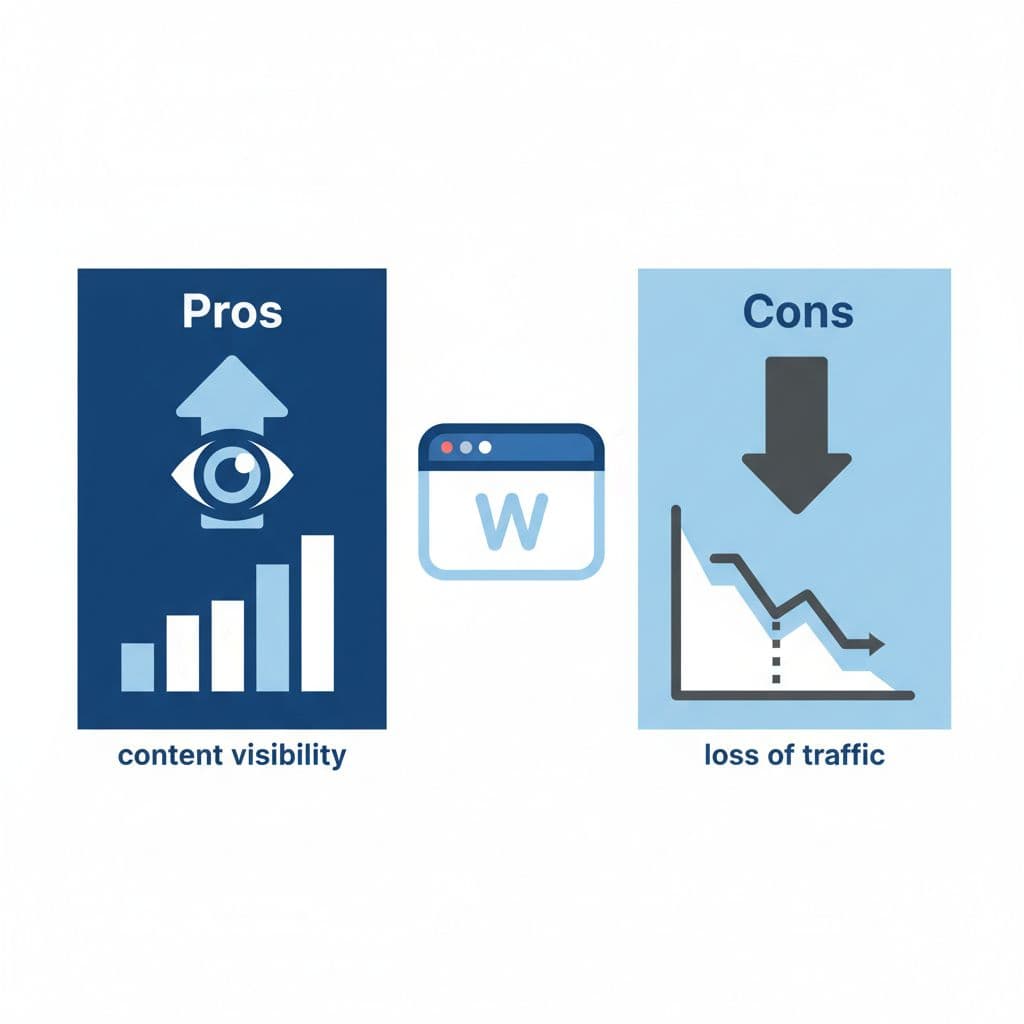
If you publish licensed data, paid research, legal resources, product databases, or anything hard to replace, blocking crawlers used for training AI models to power generative AI is a reasonable default. The same goes for sites with thin margins on content production. In those cases, broad AI reuse may create more downside than discovery.
Allowing makes sense when AI visibility supports your funnel
If your site depends on brand discovery, top-of-funnel reach, or citations that lead to demand, openness can help. Public docs, glossaries, news coverage, and educational content often fit this model. Still, allowing everything is rarely the best first move, because not all bots create the same value.
A selective policy is the best starting point for most sites
Most businesses should split the decision by bot role. Keep crawling and indexing open for search bots. Block or limit AI-related crawlers if reuse is a concern. Review user-triggered or proxy-style access more carefully, because some of that traffic behaves differently from classic crawling. For anything truly sensitive, use authentication, rate limits, or server rules. Robots.txt is a signal, not a lock.
A short 2026 checklist helps keep this sane:
- Separate search, training, and user-triggered agents before writing any robots.txt rule.
- Keep Googlebot distinct from
Google-Extended, which handles AI agents. - Use page-level tags when you need
noindex,nosnippet, or file controls. - Review logs and referral data every quarter to monitor crawler operators, because bot behavior changes.
- Publish llms.txt only as a supplement, not as your main control layer.
If you do publish llms.txt, use it as a guide file. Point to your canonical docs, explain preferred sources, and state high-level usage preferences. That can be useful. It just should not be the file you trust to block access.
Frequently Asked Questions
What is the best way to block AI training crawlers?
Use robots.txt to target specific User-Agents like GPTBot, ClaudeBot, Google-Extended, and CCBot with Disallow: /. This stops training data collection without blocking search indexing from Googlebot. Combine with path-level rules for mixed-content sites to protect high-value areas.
How does Google-Extended differ from Googlebot?
Googlebot handles primary search indexing, while Google-Extended is for AI purposes like training or overviews. Blocking Google-Extended via robots.txt does not remove your site from Google Search results. Keep them separate to maintain visibility while limiting AI reuse.
Is llms.txt a reliable way to control AI access?
No, llms.txt is a soft signal for guidance, like mapping preferred pages or policies, but major AI providers do not enforce it as a block in 2026. Use it as a supplement to robots.txt, which remains the main control. Adoption is growing, but enforcement lags.
Should I use robots.txt to de-index pages from search?
No, robots.txt blocks crawling, preventing bots from seeing noindex directives. Use meta robots tags or X-Robots-Tag for noindex, nosnippet, or file controls after allowing the crawl. Robots.txt is for access rules, not indexing.
When should I block versus allow AI crawlers?
Block if your content faces reuse risk, like licensed data or paid research. Allow for discovery-driven sites like blogs or docs where citations drive traffic. A selective policy—splitting by bot role—is best for most businesses, with server enforcement for sensitive assets.
The practical answer
For robots.txt and AI crawlers, the safest rule is simple: use robots.txt as your main control surface, treat llms.txt as optional guidance, and reserve hard enforcement via Edge Functions and HTTP requests for server-side tools that check the User Agent String.
A selective policy, including blocking AI bots where necessary to protect intellectual property, usually ages better than an all-open or all-blocked stance. When you match each bot to a business purpose, your crawler policy stops being guesswork and starts acting like a real content strategy.