Ranking for strings is no longer enough. With the shift to “things, not strings,” search engines and AI systems now embrace semantic search to identify who you are, what you know, and whether the rest of the web backs it up.
That is why entity SEO matters more in 2026. When your brand, authors, and topic coverage are easy to verify, you gain visibility in Google results, AI Overviews, ChatGPT, Perplexity, and other answer engines. For marketers, this changes content strategy, brand management, and measurement at the same time. The shift starts with how machines connect facts.
Key Takeaways
- Entity SEO prioritizes verifiable brands, authors, and topics over string matching, boosting visibility in Google, AI Overviews, and answer engines amid zero-click searches.
- Knowledge graphs thrive on clear entity relationships built through schema markup, internal linking, content clusters, and consistent offsite signals like sameAs links.
- Strong author pages and topical authority connect expertise to your brand, making machines trust and cite your content over anonymous or generic sources.
- Follow the entity SEO checklist to audit core entities, assign canonical pages, upgrade bios, build clusters around buyer intent, and standardize your story across the web for compounding gains.
Search engines and AI both need clear entities
Knowledge graphs reward clarity
An entity is a distinct thing, a company, person, service, place, product, or concept. Search systems build Knowledge Graphs, or similar relationship maps, to decide how those things connect. They do not only match phrases on a page. Using Natural Language Processing, they parse relationships between entities and place your brand in context.
That matters more now because, by April 2026, zero-click behavior is common. In many searches matching search intent, the answer appears before the visit. So if your company is easy to identify and cite, you can still win attention even when fewer users click through. Frase’s 2026 guide to entity optimization for GEO explains this shift well.
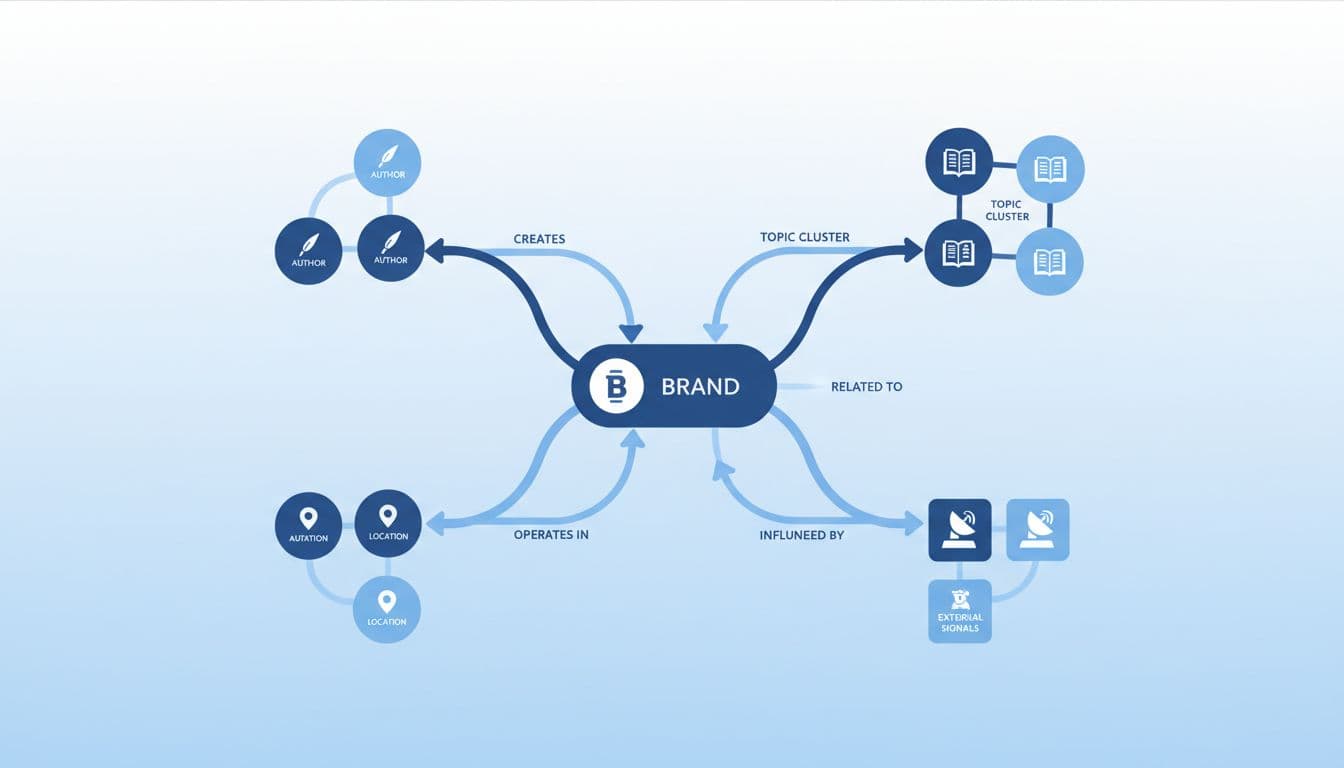
Take a law firm as an example. If the site says it handles injury cases but hides attorney credentials, service areas, office locations, and case types, machines see a weak entity. A stronger setup uses entity linking to tie the firm to named lawyers, practice pages, local offices, reviews, and cited outcomes. The same logic applies to SaaS, healthcare, finance, and B2B services.
Brand and author signals reduce doubt
Search engines do not rely on your website alone. They compare your claims with outside references, social profiles, directories, interviews, and press mentions. Consistent naming, service descriptions, leadership details, and profile links boost branded search, build brand authority, and make disambiguation easier.
Authors matter for the same reason. Anonymous content can rank, but it is harder to trust at scale. When a real person is attached to a topic they regularly publish on, the system gains a stronger reason to connect expertise to the brand. That connection influences standard rankings and AI citations alike. If the system cannot link the topic to a known source, it often falls back to brands with clearer identity via entity SEO.
Topical authority is built, not declared
Why authors matter more in 2026
A polished blog is not enough if every post uses a generic team byline. In traditional search, weak authorship blurs expertise. In AI-generated answers, it also weakens provenance. Systems want to know who said it, what that person knows, and whether the site consistently publishes within that lane.
Strong author pages are simple. Show the person’s role, experience, topic focus, recent articles, editorial standards, and links to relevant external profiles. If the topic has legal, medical, or financial risk, add review details where appropriate.
Original work helps even more. First-party data, case studies, expert commentary, and clear citations give both search engines and AI systems something to anchor to. If your author only rewrites consensus views, there is little reason to surface the page over a better-known source.
Machines do not trust polished copy on tone alone. They trust a clear identity, consistent expertise, and evidence that matches the claim.
Clusters, internal links, and schema create context
One article rarely builds topical authority. A pillar page with connected topic clusters does. Internal linking tells crawlers which page defines the core topic, which pages support it, and how subtopics relate. That structure also helps AI retrieval systems pull the right passage at the right time. An entity-first playbook for topical authority lays out this model clearly.
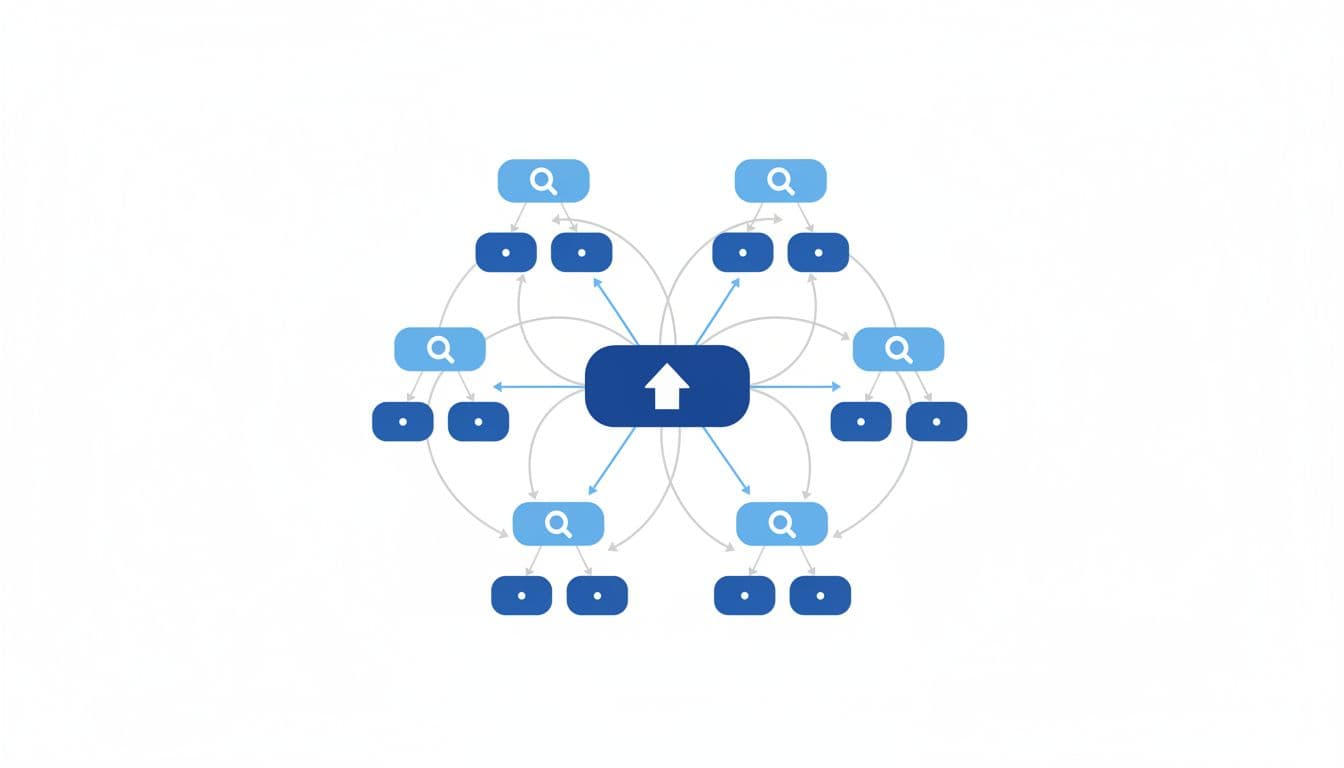
Technical SEO elements like structured data add another layer. Schema markup for Organization, Person, Article, Service, WebPage, FAQ, and BreadcrumbList, preferably in JSON-LD format, labels what is already on the page. These support entity SEO by reducing ambiguity. Meanwhile, consistent sameAs links help connect your site to trusted profiles and listings through unique identifiers from Wikipedia and Wikidata (with Freebase as a historical precursor to modern knowledge bases). This guide to organization schema and external profiles shows why those links matter.
A practical entity SEO checklist
Treat this as a repeatable operating system for entity SEO, not a one-time task. Start with an entity inventory in a spreadsheet. Include the entity name, type, canonical URL, related entities, owner, supporting assets, and status. That becomes the source of truth for content, schema, and offsite mentions. Machines assess entity importance via salience score in your text.
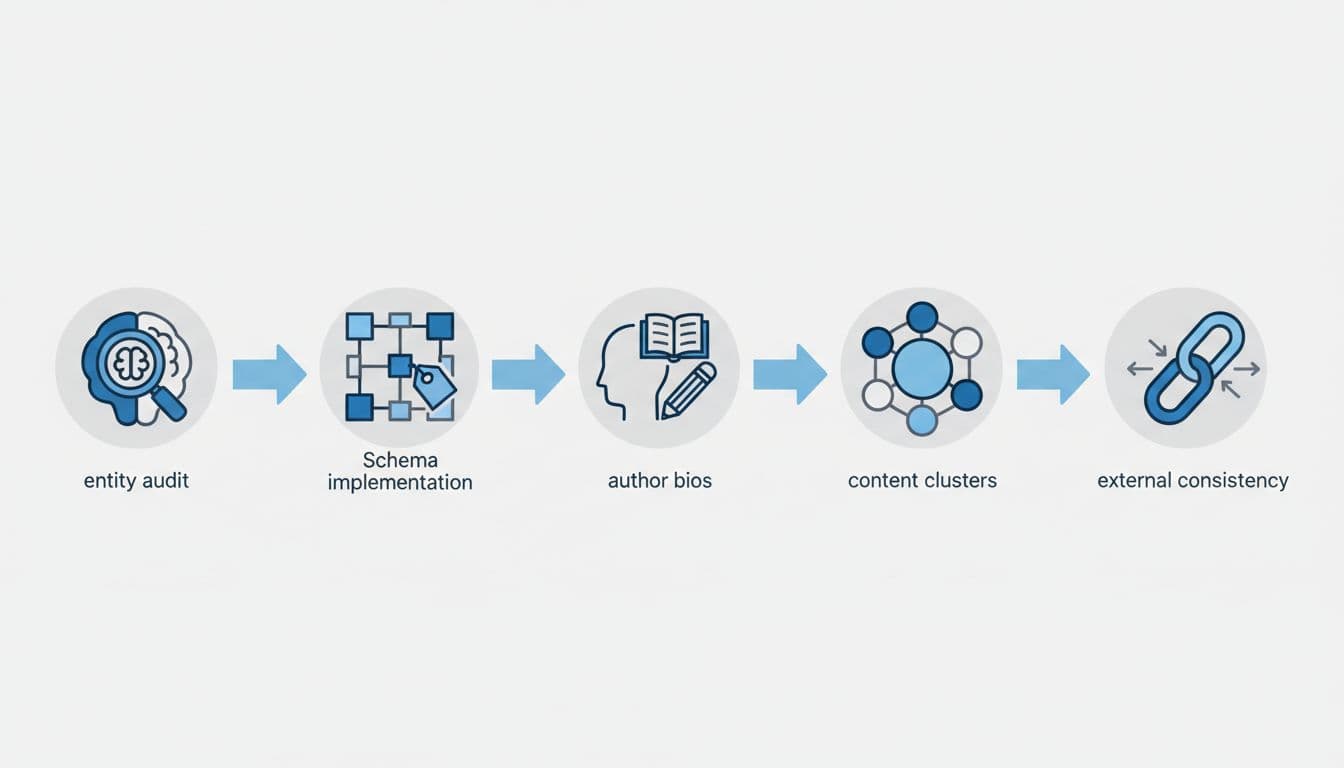
1. Audit your core entities. List your brand, products or services, locations, spokespeople, authors, and major topics. This builds your knowledge base for the brand. If you cannot name them clearly, search engines cannot either. 2. Assign a canonical page to each important entity. Your brand needs a strong homepage and about page. Each service, location, and author also needs a page that owns that topic. 3. Add structured data where it fits the visible content, implementing Schema markup. Use Organization on the brand level, Person on author pages, Article on posts, and BreadcrumbList site-wide. Validate it, then keep it consistent. 4. Upgrade author pages. Add real bios, areas of expertise, review roles, profile links, and recent work. Then connect every article back to the author page with entity linking through clear internal links. 5. Build content clusters around buyer questions matching user intent and adjacent topics. A firm that wants to own “truck accident lawyer” should also cover liability, evidence, injury timelines, insurance tactics, and local procedure. Tie those pages to a clear pillar page. 6. Standardize your story across the web. Keep brand name, services, locations, and leadership details aligned on your site, LinkedIn, directories, podcasts, and citations. Also check index coverage in Google and Bing, because some AI systems still depend on Bing’s web data. Consistent signals help in securing a Knowledge Panel and appearing in Google Discover.
This entity SEO work compounds. Each consistent signal makes your brand easier to understand, and each linked page gives both search and AI systems a cleaner path to your best answers.
Frequently Asked Questions
What is entity SEO?
Entity SEO focuses on making your brand, authors, services, and topics easy for search engines and AI to identify and verify as distinct “entities” in knowledge graphs. It shifts from keyword strings to semantic relationships, using schema, internal links, and consistent signals. This approach wins visibility even in zero-click results by building trust through contextual clarity.
Why do authors matter more in 2026?
Authors provide provenance and expertise signals that AI systems and search engines use to connect topics to credible sources. Generic bylines weaken trust, while detailed author pages with bios, expertise focus, and external profiles strengthen entity links to your brand. This influences both traditional rankings and AI citations in answer engines.
How does schema markup support entity SEO?
Schema like Organization, Person, Article, and BreadcrumbList labels entities on your pages, reducing ambiguity for machines parsing relationships. JSON-LD format with sameAs links ties your site to trusted profiles on Wikidata or directories. Consistent implementation across canonical pages amplifies salience and knowledge graph placement.
What is the entity SEO checklist?
Start with an entity inventory, assign canonical pages, add structured data, upgrade author pages, build topical clusters, and standardize signals web-wide. This repeatable process treats entities as your brand’s operating system. It compounds authority for Knowledge Panels, branded search, and AI retrieval.
Conclusion
Entity SEO is now the layer that connects rankings, citations, and brand trust. Words still matter, but clear entities, real authors, and tight topic coverage are what enable Named Entity Recognition to help machines identify expertise.
The brands that win in 2026 are easy to verify through contextual similarity in their niche. When your site, authors, schema, internal links, and offsite mentions tell the same story, both search engines and AI answers have a reason to choose you, powering entity SEO and the Knowledge Graph.