The search result is no longer always a page of links. In 2026, many buyers start with ChatGPT Search, Perplexity, Gemini, Grok, or Google’s AI Overviews, and they often get one blended answer with a short list of sources.
That shift changes what visibility means. Generative engine optimization helps your business become one of those sources, so AI systems can understand, trust, and cite your content when someone asks a real buying question.
What GEO means in the 2026 search market
GEO is the practice of shaping your website and brand signals so AI answer engines can pull your information into their replies. Traditional SEO tries to rank a page. GEO tries to make your facts, explanations, and expertise easy to quote.
This matters because AI search works more like a research assistant than a directory. It reads across sources, compares them, and builds a summary. If your page is vague, generic, or hard to parse, it may never make the final answer.
Current coverage, including eMarketer’s GEO and AEO FAQ, points to the same pattern. SEO still drives rankings and clicks, while GEO improves your odds of being included inside AI-generated answers.
In practice, GEO is about reducing ambiguity. Your business name, services, locations, authors, and claims should be consistent across your site and other profiles. Clear entities help models connect the dots. Trust signals help them decide you are worth citing.
GEO vs SEO, and why both still matter
Your site still needs the basics. Fast pages, crawlable content, internal links, strong titles, local signals, and backlinks all matter. GEO sits on top of that base.
GEO adds a second win condition: become a source the model wants to cite.
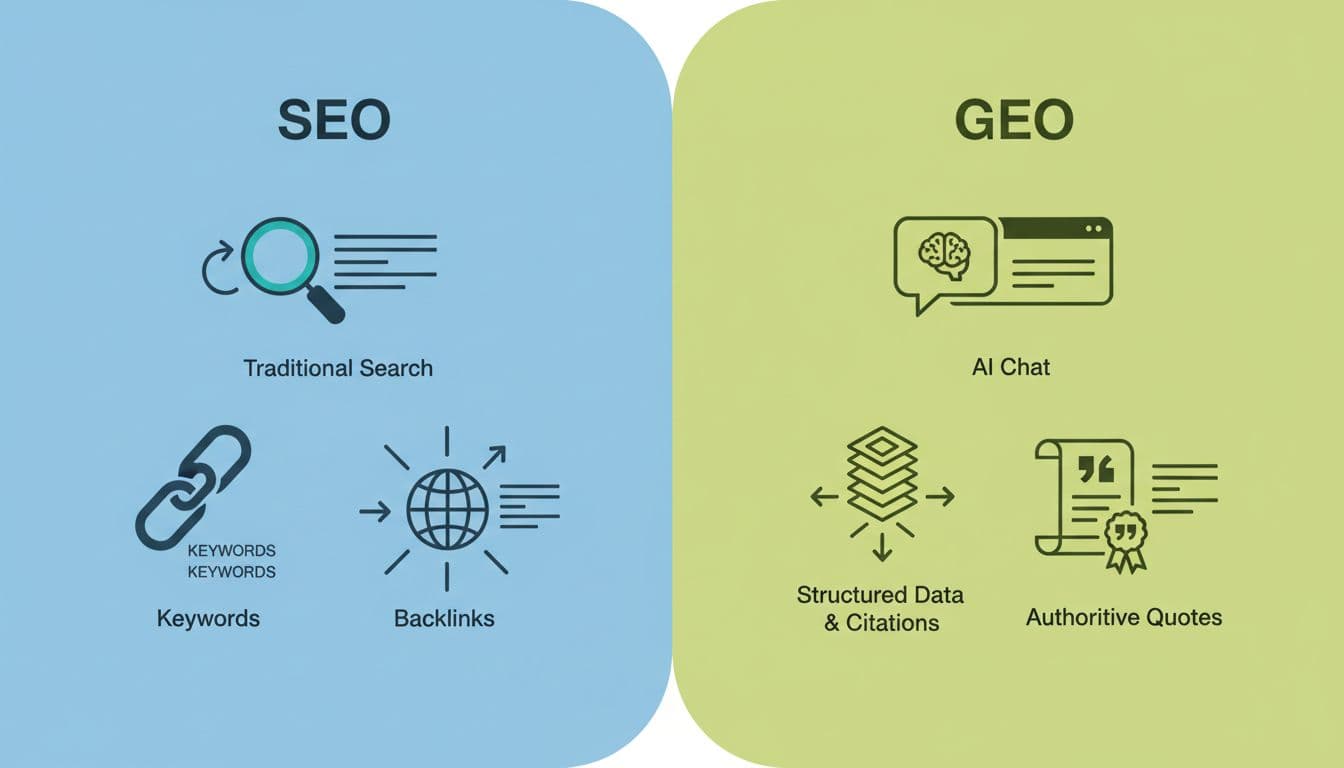
A simple side-by-side view makes the overlap clearer.
| Focus | SEO | GEO |
|---|---|---|
| Main goal | Rank pages in search results | Earn mentions and citations in AI answers |
| Content style | Keyword-targeted pages | Direct answers with clear facts and sources |
| Key signals | Relevance, links, technical health | Trust, entity clarity, structure, citation-worthiness |
| Main result | Clicks to your site | Inclusion in an AI summary |
The takeaway is simple. SEO gets you found. GEO helps you get quoted. Most teams need both, not one or the other.
That is why many of HubSpot’s GEO best practices look familiar to experienced SEO teams. The difference is emphasis. AI systems reward content that states the answer early, backs it up, and organizes details in a way a model can lift without guessing.
What optimized content looks like in AI search
AI-ready content is usually plainspoken and well organized. It answers a clear question near the top, then supports that answer with evidence, context, and source cues.
A weak service page says a firm is experienced and committed. A stronger page names the service, location, case type, likely process, and common concerns in direct language. That version gives AI something useful to cite.
For firms in competitive service markets, this law firm GEO guide shows how AI answers are already changing client discovery. The same pattern applies outside legal. Buyers ask detailed questions, and AI tools look for pages that answer them cleanly.
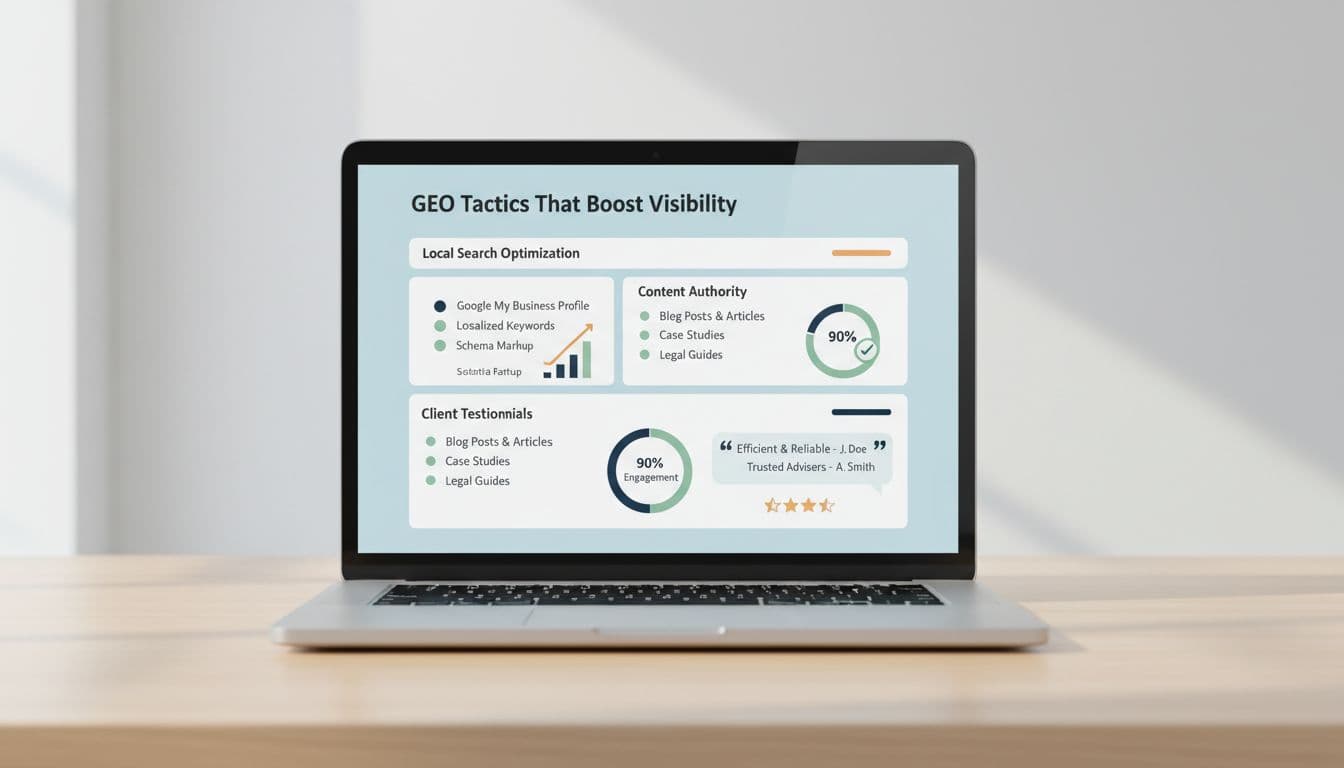
A good GEO page often includes a few repeatable traits:
- It shows entity clarity, with a consistent business name, service names, locations, and author details.
- It uses structured information, such as clear headings, concise summaries, tables, FAQs, and relevant schema.
- It builds trust with named authors, dates, external references, testimonials, case results, or policy pages where appropriate.
- It shows topical authority by covering a service area in depth, not with one thin page and a dozen random blog posts.
- It earns citation-worthiness with original data, quotable definitions, useful comparisons, and concrete examples.
A law firm page, for example, might open with “What damages can you recover after a truck accident in Texas?” Then it gives a short answer, a table of damage types, a quote from a named attorney, and a short FAQ with a last-updated date. That format helps both people and machines.
A practical GEO plan, and the takeaway
Start with five high-intent pages. Service pages, location pages, comparison pages, pricing pages, and FAQs are the best places to begin. Rewrite the opening of each page so it answers the main question in 40 to 60 words.
Next, clean up your identity signals across the web. Use the same business name, author names, addresses, practice areas, and service labels on your website, Google Business Profile, directories, and social profiles. Then add structure, with scannable headings, short tables, FAQ sections, and source links where claims need support.
After that, review your content clusters. If you want visibility for one service line, publish enough depth around that topic to show real authority. A handful of thin pages will rarely compete with a site that explains the subject from several angles.
Do not chase an exact ranking formula. No one outside the platforms has one. Track a fixed set of prompts, note when your brand appears in AI answers, and study which pages get cited.
The businesses that show up in AI search are often the ones that make their expertise easy to verify and easy to quote. In 2026, clarity is no longer a nice extra. It is part of being visible at all.