Good rankings no longer guarantee results. In 2026, a page can win the click, lose the visitor, and never earn the lead.
That is why Search Experience Optimization matters. This discipline combines Search Engine Optimization, User Experience, and Conversion Rate Optimization to ensure people find your page, use it easily, and take action. With the rise of AI answers, featured snippets, and the prevalence of zero-click results, providing a high-quality experience now matters almost as much as basic visibility.
Key Takeaways
- Define SXO as a bridge: Unlike traditional SEO which focuses primarily on rankings, Search Experience Optimization integrates SEO, UX, and conversion strategy to ensure visitors don’t just land on a page but actually achieve their goals.
- Prioritize intent and clarity: To win in 2026, pages must address user intent immediately, providing direct answers above the fold to satisfy impatient searchers and align with how AI search engines interpret content.
- Remove friction to drive action: A high-performing page must be fast, mobile-responsive, and free of obstacles like intrusive pop-ups, ensuring that trust signals and clear calls to action guide the user toward a specific conversion.
- Adopt an iterative audit mindset: Instead of relying on full redesigns, use behavior data—such as heatmaps and session recordings—to test and refine one page element at a time, continuously improving performance based on real user interactions.
What Search Experience Optimization means, and how it differs from traditional methods
Search Experience Optimization (SXO) is the bridge between finding a page and achieving a result. It asks a fundamental question: after a user finds your content, does the page effectively help them complete their goal?
Traditional Search Engine Optimization often focused exclusively on rankings and incoming traffic. SXO goes significantly further because it measures whether the visit leads to clarity, trust, and action. This focus on the post-click experience ensures that your content does not just attract visitors, but actually serves their needs.
This quick comparison sets the baseline:
| Focus area | Traditional SEO | SXO |
|---|---|---|
| Main goal | Rank higher | Help users complete a task |
| Success metric | Traffic | Traffic, engagement, and conversion |
| Content style | Keyword-led | Intent-led and easy to use |
| Page design | Secondary concern | Core part of performance |
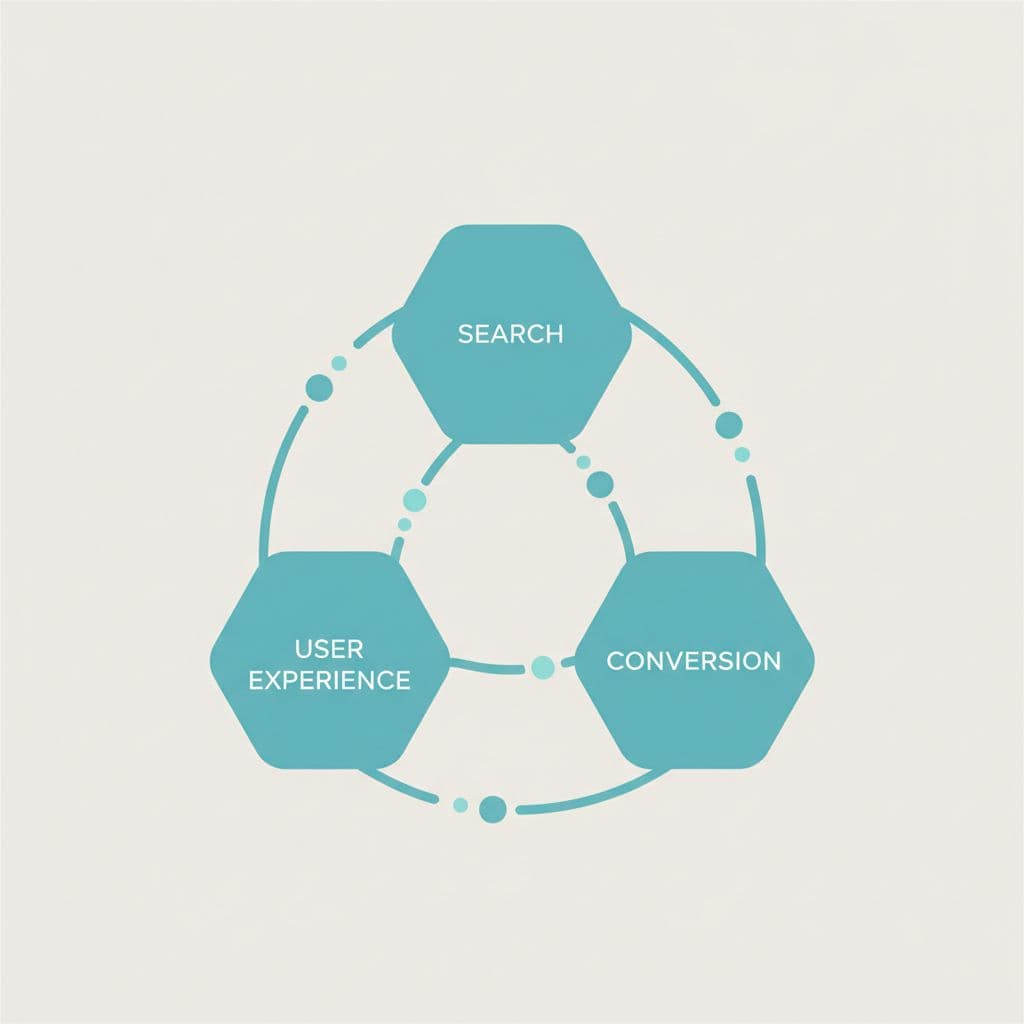
### The three parts of Search Experience Optimization: visibility, usability, and action
SXO consists of three essential components. Visibility refers to how people discover your page through search engines, AI summaries, local results, or social channels. Usability is how quickly they understand the content once they arrive. Action is how easy it is to contact you, book a service, subscribe, or request a quote.
Picture a service page for managed IT support in Dallas. If it ranks well but loads slowly, the visit stalls immediately. If it loads fast but hides pricing, social proof, and contact options, the lead still disappears.
Why SXO is a better lens for 2026 search performance
The modern search journey now begins across various platforms, from traditional search engines to social media and review sites, which makes increasing your search visibility more complex than ever. Generative AI and tools like Perplexity or ChatGPT are also changing how users retrieve information. As a result, the page that wins is often the one that provides a fast, clean answer and a clear next step.
This is why content structure matters more now. By focusing on semantic search and providing direct answers, you make it easier for both humans and AI systems to parse your value. Pages that explain the answer early, use clear headings, and show trust signals perform better in this new landscape. For added context, this 2026 SXO guide gives a useful summary of how search experience connects rankings with user satisfaction.
Rankings get attention. SXO gets action.
A practical SXO checklist you can use on any page
This checklist works best for service pages, high-intent blog posts, comparison pages, and lead-gen landing pages. Use it before launch and during audits.
Start with search intent and give the main answer fast
Success begins with solid User Intent. Match the page to one clear intent to ensure your content satisfies the visitor. A blog post usually answers an informational query, while a service page often serves commercial or transactional intent. If the query is “best CRM for small sales teams,” the page should compare options fast, not open with a brand history lesson. Proper intent matching is the foundation of a successful search experience.
Put the answer in your above-the-fold content. In the first screen, state what the page is, who it helps, and what to do next. If your team wants a second set of eyes on high-value pages, you can Get a Free Consultation before you push more traffic to them.
Make the page fast, clean, and easy to read
Improving page speed and readability is a single, unified job. Compress images, trim unused scripts, check Core Web Vitals, and prioritize mobile optimization. If a visitor waits, scrolls, and squints, the page is already losing.
Then clean up the layout. Use short paragraphs, useful subheads, obvious spacing, and simple language. This cross-platform search experience framework is helpful if your team is also planning content for AI search and answer engines.
Remove friction that gets in the way of action
Most weak pages fail in obvious places because they interrupt users before they can decide. Prioritize friction reduction to ensure a smooth journey.
Check for blockers like these:
- intrusive pop-ups that cover the content
- broken links or dead buttons
- tiny tap targets on mobile
- forms with too many fields
- phone numbers or emails that are hard to find
- issues with your on-site search functionality
Open your top landing page on your phone and act like a prospect. If it feels annoying, it probably is.
Add trust signals that make people feel safe
Trust is part of the user experience. A page without proof asks people to take a risk. Focus on content relevance to show users you understand their specific needs.
Add the basics that reduce doubt: real reviews, named case studies, author bios, source citations, company details, and clear contact information. For a B2B service page, even one short client result with context is stronger than broad claims like “industry-leading solutions.”
Make the next step obvious with clear CTAs
Every page needs one main action. If the page goal is a demo request, the buttons, forms, and nearby copy should all support that goal. Mixed signals reduce response.
Use a clear call to action with plain button text such as “Book a demo,” “Request pricing,” or “Talk to sales.” On a guide or article, use a softer CTA in the first third and repeat it later without getting pushy. Short forms also help, because most buyers will not trade a lot of personal data for a first conversation.
How to measure whether SXO is actually working
Traffic remains a vital checkpoint, but it is only the starting point. Successful Search Experience Optimization (SXO) happens when users arrive, engage, and move forward. By monitoring user behavior and tracking key engagement metrics, you can refine your strategy to ensure your content delivers real value.
Use behavior data to spot weak pages
Start by analyzing Google Search Console and GA4 data, focusing on impressions, clicks, CTR, and your conversion rate. Then, use Heatmaps and session recordings to watch how visitors interact with your content. Look for signs of friction, such as rage clicks, dead clicks, or abrupt stops in scrolling. Sometimes, these behavioral insights reveal underlying Technical SEO issues, such as slow loading speeds or layout shifts, that are hurting the visitor experience.
This quick view keeps reporting grounded:
| Signal | What it often reveals |
|---|---|
| Low CTR | Weak title or poor match to intent |
| High bounce rate | Slow load or unclear opening |
| Shallow scroll depth | Users did not find value early |
| High conversion rate drop-off | Too much friction near the goal |
The goal is not to collect more dashboards. The goal is to identify exactly where the page fails the visitor.
Test one change at a time and keep what works
Small tests consistently outperform full redesign guesses. Change the headline, move the CTA higher, shorten a form, or reorder page sections. Then, compare the performance over a set period.
This works because SXO is a continuous process. The first version of a page is rarely the best version, especially as search behavior shifts over time. By iterating based on real data, you ensure that your pages always align with what your audience expects.
Common SXO mistakes that hurt rankings and conversions
Most underperforming pages do not need a full rebuild. They need clearer priorities.
Writing for search engines instead of people
Keyword stuffing still hurts your performance. So does vague copy that dances around the answer. Focus on content relevance by writing in natural language, answering the searcher’s task early, and supporting your claims with proof. If the page sounds mechanical, user trust drops fast, which ultimately signals to search engines that your page fails to satisfy the intent.
Hiding the answer below the fold
Visitors should not have to hunt for the point. Your above-the-fold content must clearly state what the offer is, who it is for, and what happens next. This matters even more in 2026 because users arrive with less patience. The rise of Generative AI has trained people to expect instant, concise answers, and if they cannot find value immediately upon landing, they will likely return to the search results.
A simple way to turn this checklist into a team workflow
Search Experience Optimization works best when it becomes an integrated part of your process rather than a last-minute fix. By embedding these standards into your daily operations, you ensure that every asset serves both users and search engines effectively.
Use the checklist on new pages before launch
Create a short pre-publish review involving three key owners: content, design, and conversion. One person checks intent match and clarity. A second checks layout, mobile responsiveness, and page speed. The third focuses on CTAs, forms, and tracking. Additionally, include a dedicated check for personalization to ensure the content speaks directly to the needs of your specific audience segments.
This collaborative review catches expensive errors early. It also prevents content teams from publishing pages that earn rankings but fail to drive meaningful results.
Use the checklist on existing pages during audits
Start with the pages that already matter to your business. Review high-traffic URLs, pages tied to direct revenue, and content pieces with strong impressions but weak conversion rates. Score each page based on clarity, speed, trust, and clear calls to action.
After the audit, prioritize fixing pages with the highest potential for business growth. A steady, iterative audit cycle usually delivers better results than a massive, infrequent redesign that takes months to ship.
Conclusion
Search Experience Optimization helps users find your content, understand it quickly, and take action without unnecessary friction. This holistic approach fits the digital landscape of 2026 much better than a traditional focus on search visibility alone.
The most successful pages are useful, fast, and easy to trust. If you want to improve lead quality without relying on guesswork, audit your top-performing pages using this checklist first.
If you want expert guidance on prioritizing these fixes, follow our clear call to action and Get a Free Consultation to review the pages that matter most to your business growth.
FAQ
What is SXO in simple terms?
SXO stands for Search Experience Optimization. It combines SEO, user experience, and conversion work so a page gets found, works well, and drives action.
Is SXO different from SEO?
Yes. Search Engine Optimization focuses on visibility, while SXO includes that visibility plus a focus on User Experience and conversion mechanics after the user clicks through to your site.
Which pages should a marketing team audit first?
Start with pages that already get traffic or influence revenue. Prioritize service pages, pricing pages, demo pages, and high-intent blog posts by analyzing user behavior and confirming that the content matches the specific user intent behind the search query.
What tools help measure SXO?
GA4, Google Search Console, and Microsoft Clarity are a strong starting stack. They show how people find the page, how they use it, and where they drop off.
How often should teams review SXO performance?
Review core pages every month and after major updates. High-value landing pages often need tighter testing cycles because small changes can move lead volume.