Google’s algorithm updates matter to CMOs because they shape demand, traffic, and pipeline, not just Search Engine Results Pages. When search shifts, content plans, site fixes, and budget calls shift with it.
The Google Algorithm History is a timeline of changing ranking signals, from early keyword and link rules to today’s systems that read intent, quality, and authority at scale. If you lead marketing, that history helps you see why some pages gain traction on Search Engine Results Pages while others stall, even when the same team publishes both.
It also gives you a cleaner way to make long-term choices about content, technical quality, and brand trust. As Search Engine Results Pages become more shaped by AI, the lessons from past updates matter even more, so let’s start with the changes that set it all in motion.
Key Takeaways
- Google’s algorithm started with PageRank’s link-based trust model, shifting search from keyword stuffing to authority and reputation as core ranking factors.
- Early updates like Florida, Panda, and Penguin cracked down on spam, thin content, and toxic links, forcing marketers to prioritize quality, relevance, and genuine connections over shortcuts.
- Later shifts with Hummingbird, RankBrain, BERT, and core updates emphasized user intent, semantics, E-E-A-T, and helpful content, making clear, credible pages essential for visibility.
- For CMOs, durable success comes from building resilient assets—strong content, site health, and brand trust—that withstand core updates and deliver pipeline value amid AI-driven changes.
How Google started ranking pages in the first place
Google did not begin by counting how often a keyword appeared on a page. It started by asking a better question, which pages did other pages trust? That shift changed search because it gave Google a way to judge authority as a ranking factor instead of just matching words.

### Why PageRank changed search forever
PageRank treated links like votes of trust. If a respected site linked to another page, Google saw that as a ranking signal that the page mattered. Not every vote carried the same weight, either, since links from important pages counted more than links from weak ones.
That idea made search much smarter than older systems. Early engines leaned hard on page text, so they often rewarded pages that repeated a phrase over and over. Google added a layer of judgment that looked at how the web connected, which gave it a cleaner way to sort useful results from noisy ones.
A small network of trusted links could say more than a page packed with repeated terms. The original PageRank paper explains the basic model clearly, and Stanford’s paper archive still shows how central the idea was to Google’s early design. Search quality improved because Google could rank pages by reputation, not just wording.
In plain terms, PageRank turned the web into a map of recommendations.
What early SEO looked like before major updates
Once ranking started to depend on links and keywords, marketers moved fast. Early SEO was often basic and easy to game. A page could climb by repeating terms, hiding text in the background, or collecting weak directory links with little real value.
Common tactics included:
- Keyword stuffing, where pages repeated the same phrase until the copy felt broken, creating low-quality content.
- Hidden text, often placed in white on white or tucked off-screen.
- Link spam, such as low-value directory links, which were built for volume, not trust.
That period set the stage for later updates. Google had to get better at spotting manipulation, because the first wave of SEO showed how quickly people would push ranking signals too far.
The first major updates that pushed spam out of search
Google’s early Spam Updates changed search in a big way. The company had to protect results from pages built to trick the system, not help the user. That meant low-quality content, duplicate pages, and link schemes started losing ground, and site owners had to care more about trust than shortcuts.
### Florida, Panda Update, and the move against thin content
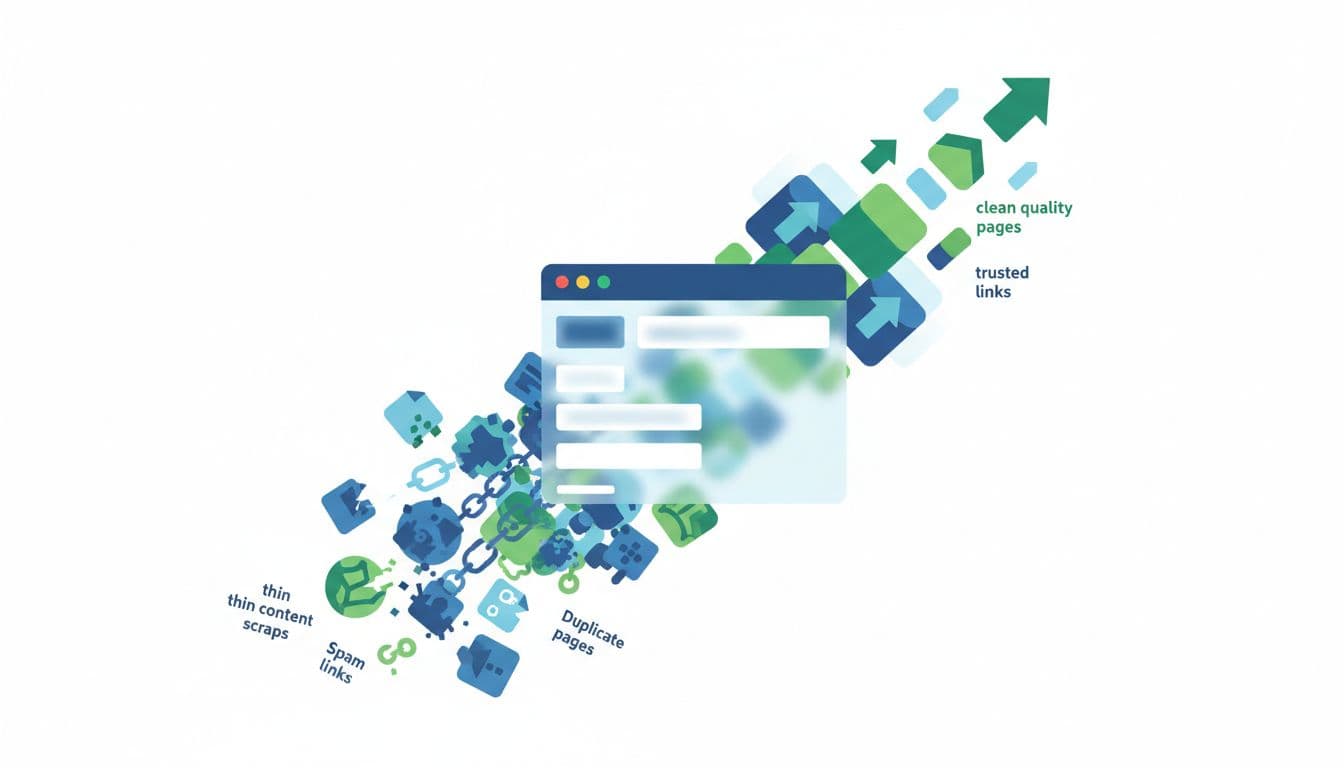
Florida was one of the first clear signals that Google would punish manipulation. It hit sites that relied on keyword tricks, doorway pages, and weak tactics built for rankings instead of users. For many businesses, it was the moment when search stopped rewarding pages that looked busy but said very little.
The Panda Update pushed that idea further. It targeted thin content, duplicate pages, and sites with too many low-value articles. In plain terms, the Panda Update wanted fewer pages that repeated the same idea and more pages that gave the searcher something useful. If a site looked like it was built mainly to rank, the Panda Update made it much harder for that site to hold top positions.
That shift mattered because it changed the basic math of SEO. A large site no longer won just by publishing more pages. Quality had to show up in the copy, the structure, and the way topics were covered. Search became less like a volume contest and more like a trust test.
Penguin Update and the fall of toxic link building
The Penguin Update attacked another common shortcut, unnatural backlinks. Many sites had been buying links, trading links in bulk, or using link spam networks to inflate authority. The Penguin Update made those patterns risky, because Google started reading link quality much more carefully.
The lesson was simple. A hundred weak links could hurt more than help, while a smaller group of real, relevant links carried more value. That changed how marketers thought about authority. Link volume stopped being the goal, and link quality became the real measure. The Penguin Update clarified that link spam would no longer boost rankings reliably, pushing sites toward genuine connections. The Penguin Update set a new standard where relevance in links mattered most.
For a good overview of how these early updates fit together, Search Engine Land’s history of Google algorithm updates shows how Florida, the Panda Update, and the Penguin Update each targeted a different kind of abuse.
Shortcuts became expensive. Relevance and trust became the safer path.
What businesses learned from these early penalties
For CMOs, the lesson was bigger than search traffic. These updates showed that growth built on weak content and shaky links could disappear fast. A site could rank well for months, then lose visibility as soon as Google got better at spotting patterns through manual actions.
That pushed teams to fix the basics and avoid manual actions:
- Better content that answers real search intent
- Cleaner site structure so important pages are easy to find
- Stronger authority signals built through real mentions and useful references
- Less duplication across pages, sections, and campaigns
The brands that adapted early had an easier time later. They invested in pages that help people decide, compare, or act, and they treated trust as a core ranking asset. That mindset still matters, because the early history of Google algorithm updates showed a clear rule, spam may win briefly, but it rarely lasts, a principle that carries into today’s broad core updates.
How Google made search more human and less mechanical
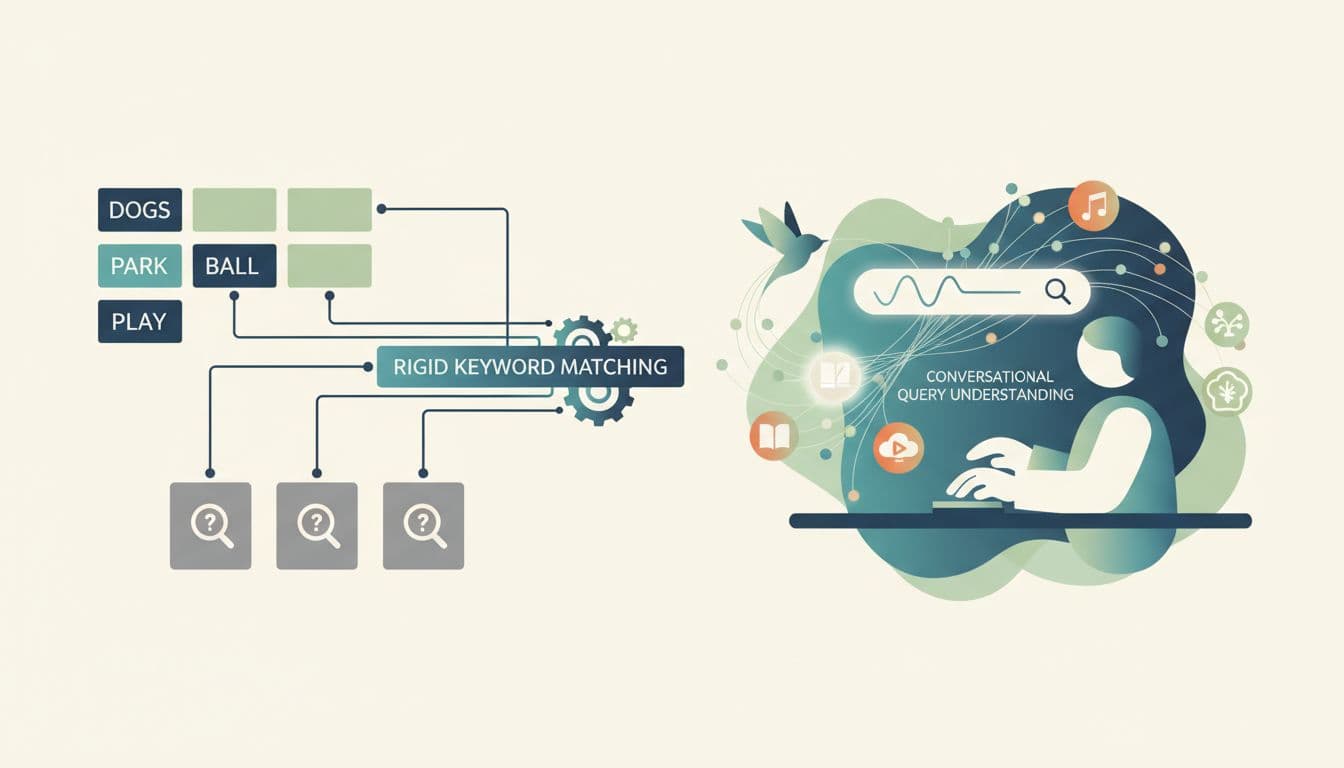
Google’s early ranking systems were good at matching words, but they were not great at reading people. That started to change when the company focused less on exact terms and more on meaning, context, and intent. For CMOs, that shift matters because it changed how content wins. Pages no longer needed to repeat a phrase to rank, they needed to answer the real question behind the query.
### Hummingbird Update and the rise of intent-based search
The Hummingbird update pushed Google toward reading whole phrases and full questions, not just single keywords. That mattered because people do not search like a spreadsheet. They ask, compare, and phrase things in natural language, especially on mobile and voice search. By leveraging the Knowledge Graph to connect entities and context, Google began looking at the meaning behind the query and search query intent.
A search for “best car for a family of five” could now connect to helpful pages about space, safety, and price, even if those exact words did not appear in the title. Search became less mechanical and more like a good sales conversation.
For content teams, this changed planning. Topic clusters, FAQs, and supporting pages became more useful than one-off keyword pages. It also rewarded copy that answers the next question before the reader has to ask it, aligning closely with search query intent.
RankBrain and the role of machine learning
RankBrain helped Google deal with searches it had never seen before. In simple terms, this machine learning system learned patterns from behavior and used them to make better guesses about what people wanted. When a query was vague or new, RankBrain helped connect it to results that performed well for similar searches.
That had a clear business effect. Brands that focused on useful pages, strong engagement, and clear topic coverage were more likely to benefit. The old habit of chasing exact-match phrases mattered less, while pages that satisfied intent started to stand out. RankBrain’s machine learning capabilities accelerated this trend toward smarter, more adaptive ranking.
Search Engine Journal’s Google algorithm history overview shows how RankBrain fit into the broader shift toward smarter ranking systems.
BERT and why context became more important than keywords
BERT gave Google a better read on sentence structure, prepositions, and natural language through advanced natural language processing and semantic search. That sounds technical, but the result was simple: Google got better at understanding what a query actually meant. Small words like “for,” “to,” and “with” suddenly mattered more because they changed the intent of the search. BERT also built on the Knowledge Graph to refine how entities and context interconnect.
That update rewarded clearer writing. If your content answered questions directly and used plain language, it had a better shot at matching real search intent. If it relied on awkward keyword phrasing, it looked less useful.
Clear writing became a ranking advantage because Google could understand it better.
For marketers, the lesson is direct. Write for people first, organize content around intent, and make each page solve a specific job for the reader.
The era of quality signals, trust, and helpful content
Google’s history took a clear turn when raw ranking tricks stopped working as well. Core Updates began reshaping large groups of sites at once, so the pressure moved from quick fixes to real quality. For CMOs, that meant search visibility started to depend more on trust, expertise, and whether a page truly helps the reader.
Medic, core updates, and the push for stronger expertise
The 2018 Medic update is a good example of how a broad core update changed the rules. Google did not target one site type alone, but many health, finance, and legal pages felt the impact because those topics affect money, health, and life choices.
Those pages fall into “Your Money or Your Life” territory, so Google expects stronger proof of E-E-A-T. That usually means clear authorship, accurate information, strong brand signals, and content that shows real subject knowledge. If a site features low-quality content or looks thin and vague, it has a harder time earning visibility.
Core Updates also made ranking swings feel less predictable with increased ranking volatility. A site could lose or gain traffic without a single obvious technical error, because Google was rebalancing how it judged usefulness and authority. Similarly, the Product Reviews Update showed niche-specific quality shifts by prioritizing detailed, experience-based reviews over superficial ones. For leadership teams, that was a hard but useful lesson. Search performance is often a reflection of overall credibility, not just page-level optimization.
Why helpful content matters more than ever
The Helpful Content Update pushed this idea further. Google started rewarding pages that solve real problems, not pages built mainly around search volume or low-quality content. That shift matters because high traffic means little if the visitors never convert.
For CMOs, the question is simple: does this page attract buyers who trust the brand, or just drive empty visits? A strong search-focused content strategy puts the user problem first, then shapes the page around that need. It helps teams write for the right intent, which usually improves lead quality and brand trust at the same time.

If content exists only to catch impressions, it usually fades. If it answers a buying question well, it earns longer attention and stronger pipeline value.
What site quality signals Google seems to reward
Google rarely hands out a public checklist, but the pattern is clear from Core Updates like the Page Experience Update. Sites that feel useful, easy to use, and consistent across topics tend to perform better over time, especially after broad core updates.
A few signals matter again and again:
- Page experience, because the Page Experience Update and Core Web Vitals mean slow or clumsy pages hurt trust fast.
- Clarity, because direct answers beat vague copy.
- Original insight, because repeat content rarely stands out.
- Clean navigation, because readers should find the next step without friction.
- Consistent topical depth, because scattered pages weaken authority and E-E-A-T.

> Strong brands usually win here because their content feels complete, not just optimized. The Helpful Content Update and Product Reviews Update reinforce E-E-A-T by favoring genuine expertise over manufactured signals, reducing ranking volatility for trustworthy sites.
That is where site reputation matters. Google seems to favor brands that publish steady, useful, well-organized content across a topic, especially when the writing shows experience and strong Core Web Vitals. When the site architecture is clear and the content is consistent, the brand looks more reliable to both users and search systems.
For teams that want stronger pipeline results, this is where revenue-driven marketing support becomes practical. It connects content quality, site trust, and lead generation instead of treating them as separate jobs.
What today’s Google updates mean for brands right now
The biggest lesson from the Google Algorithm History is still true today. Google keeps rewarding pages that feel useful, credible, and easy to use. That puts pressure on brands to stop chasing temporary lifts and start building assets that hold up through Core Update cycles and Spam Updates.
For CMOs, the practical shift is clear. Search visibility now depends on content quality, site health, and brand trust working together as key ranking factors. A strong page can still lose ground if the site is slow, the message is thin, or the content system produces near-duplicates across channels.
Why short-term tricks keep losing to durable assets
Every major update has pushed search closer to real value and farther from manipulation. Florida, Panda, Penguin, the Mobile-friendly update, Product Reviews Update, Core Updates, broad core updates, helpful content rules, and recent Spam Updates all moved in the same direction, even if the tactics changed. Google keeps tightening the gap between what ranks and what truly helps a searcher, including through policies like Site Reputation Abuse.
That means durable assets are safer bets than quick wins. Strong service pages, clear UX, original insights, trusted brand signals, and adherence to ranking factors keep paying off because they are harder to fake and easier to defend during volatility.
If a tactic works only until the next update, it was never a strategy.
For competitive service businesses, this matters even more. Buyers compare firms carefully, so thin pages and generic copy do more harm than good. Pages that explain outcomes, answer objections, and show proof will outlast shortcut-heavy content almost every time, especially after the Mobile-friendly update and Product Reviews Update emphasized user experience and detailed reviews.
How CMOs should think about update resilience
Update resilience starts with diversification. Organic search matters, but it should not carry the full growth plan. CMOs need traffic from SEO, paid search, email, referrals, and brand demand so one Core Update or Spam Update does not shake the whole pipeline amid ranking volatility.
A stable content system also helps. That means:
- Clear topic ownership across service lines
- Regular audits for thin, outdated, or overlapping pages
- Technical checks for speed, crawlability, and index health
- Content reviews tied to leads, not just visits
The teams that do this well treat search as an operating system, not a one-off campaign. They watch performance patterns, fix weak pages early, and keep improving the parts of the site that support revenue, building defenses against ranking volatility from broad core updates and Site Reputation Abuse enforcement.
Where Google Search may keep heading next
Google is moving toward AI Overviews, Featured snippets, more conversational search, and results that use more context. That already changes how people scan answers and choose links. It also means brands need content that is clear enough for machines, but specific enough for humans, positioning them well for AI Overviews and Featured snippets.
The likely winners are still the same kinds of brands: the ones that publish helpful, well-structured pages and keep their sites technically sound, even as Core Updates evolve. Search Engine Land’s review of Google’s 2024 updates shows how often Google has pushed in that direction already, including with AI Overviews.
The next round of change may alter how traffic arrives, but it won’t change the core rule. Brands that build trust, clarity, and consistency will have a better shot at holding visibility when the next Core Update or Spam Update rolls through, minimizing ranking volatility.
Frequently Asked Questions
What was PageRank and why did it change search?
PageRank treated links as votes of trust, with authoritative sites passing more value, allowing Google to rank pages by web reputation rather than keyword repetition. This made search smarter by favoring useful, connected content over manipulative text stuffing. For marketers, it set the foundation for authority as a lasting ranking signal.
How did Panda and Penguin updates impact SEO strategies?
Panda targeted thin, duplicate, and low-value content, while Penguin penalized unnatural link schemes and spam networks. These updates shifted focus from volume to quality, making genuine, relevant content and links the safer path. Businesses learned that shortcuts like keyword stuffing or bought links could lead to fast traffic drops.
Why does E-E-A-T matter in today’s Google updates?
E-E-A-T (Experience, Expertise, Authoritativeness, Trustworthiness) became central in updates like Medic and Helpful Content, especially for YMYL topics, rewarding proven credibility over superficial optimization. Sites with clear authorship, accurate info, and user-focused pages hold up better in core updates. For CMOs, it ties directly to brand trust and lead quality.
How can CMOs build resilience against core updates?
Focus on diversification across channels, regular audits for thin content and technical issues, and content that solves real user intent with E-E-A-T signals. Prioritize page experience, topical depth, and original insights to minimize volatility. Treat search as a long-term system, not quick wins, for steady pipeline growth.
Where is Google’s algorithm heading next?
Toward AI Overviews, conversational search, and more context-aware results, still rewarding helpful, structured content from trustworthy brands. Updates continue pushing quality over manipulation, with signals like Core Web Vitals and site reputation gaining weight. Brands adapting early with clear, human-centric pages will thrive.
Conclusion
The Google Algorithm History shows a clear pattern, Google keeps rewarding pages that are useful, trustworthy, and built for people. Every Core Update pushes search a little farther from shortcuts and a little closer to real value.
For CMOs, that history is useful because it turns search from a guessing game into a planning tool. When you understand how Google has changed, it becomes easier to make better calls on content, SEO, and site quality, especially when traffic and pipeline depend on steady visibility in Search Engine Results Pages.
The main lesson is simple, build for lasting visibility instead of chasing every update. Brands that focus on clarity, credibility, and real user value are better prepared for the next shift, and the one after that.